
"We’re just being transparent with you guys": How the Israel Lobby gets it done.
Tales of the Israel Lobby: Episode 1.

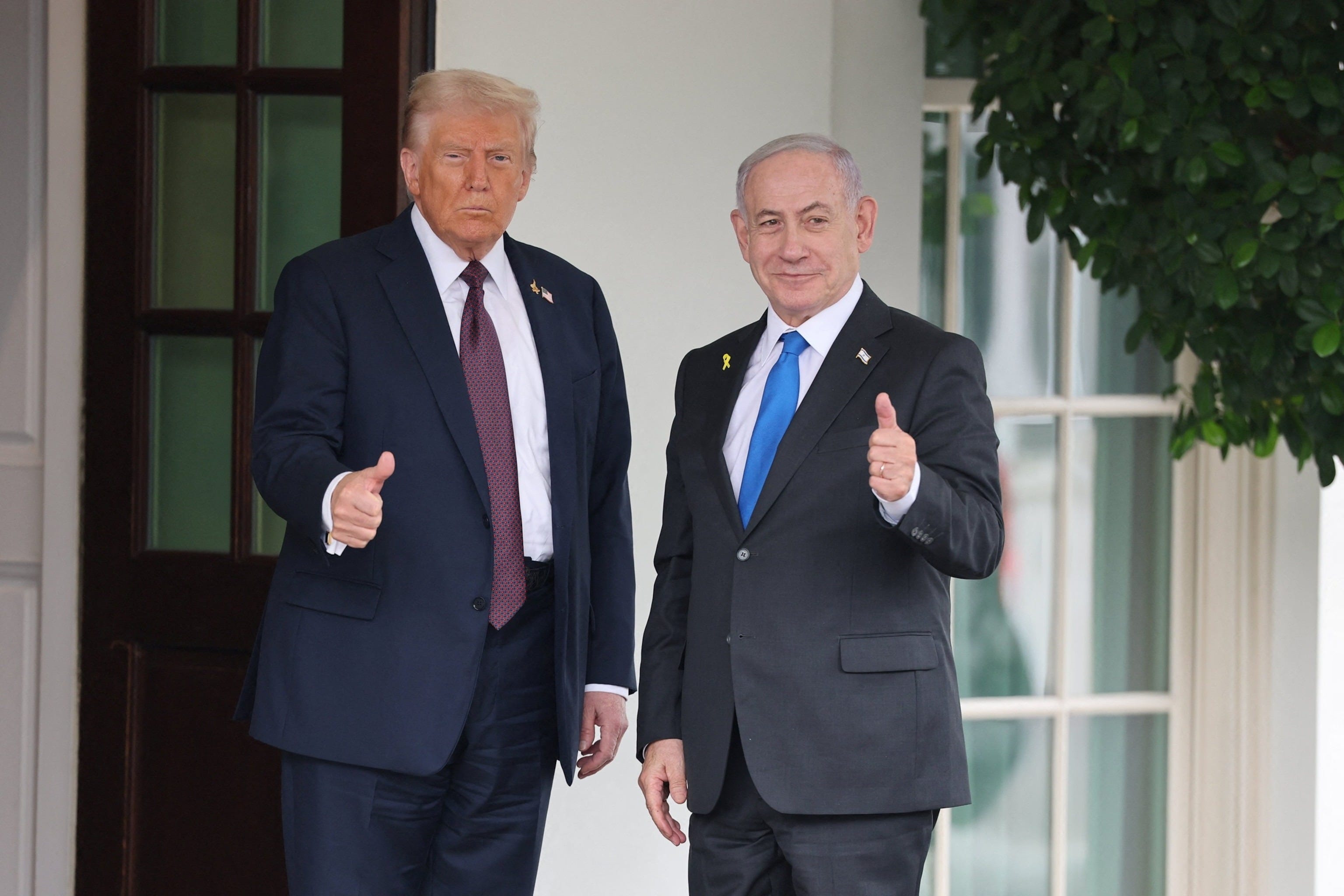
Fresh from his resignation as counter-terrorism chief Tuesday, Joe Kent went on Tucker Carlson to air his case against Trump’s war on Iran. It was a two-fold charge: The war had been launched on Israel’s behalf, “due to pressure from Israel and its powerful American lobby.” And Israel’s case for war was based on lies.
“I know how this works,” Kent explained, according to an account of his comments in the Guardian:
I know the Israeli officials — some in intelligence, some in government — will come to US government officials and they will say all kinds of things that we know from our intelligence just simply isn’t true. They’ll say, hey, I’m giving you a preview, it’s not in intelligence channels yet, but here’s what’s gonna happen. And that doesn’t usually come to fruition.
Kent’s remarks drew “swift condemnation in some quarters,” the Guardian reported, “with critics arguing that references to an ‘Israeli lobby’ veer into offensive tropes.” Indeed, that very day, Michael J. Koplow, chief policy officer of the Israel Policy Forum, issued a public warning to Democrats: They were not to amplify Kent’s message, even if they shared his doubts about the war.
Koplow conceded that Iran likely posed no imminent threat to the US. He acknowledged that the “resilience” of the Iranian regime had been underestimated. But he put Democrats on notice that they will be expected to watch their language. Conceding the two points above is fine. Saying “this is all Israel’s fault” is a no-no:
It is the jump from point A to point B where the dark antisemitic conspiracy theory comes in. It takes it as a given that Trump could not have possibly wanted to tackle Iran’s nuclear program, its ballistic missiles, or its leaders who attempted to assassinate him and officials from his first term, and that he was beguiled by Netanyahu and a group of perfidious Jews who took control of his actions.
Koplow is right to suggest that the public is confused about the Israel Lobby and that where confusion reigns, conspiracy theories tend to follow. What needs to be explained is precisely how Israel is able to bend US foreign policy to its will even when those who make policy are pursuing their own home-grown objectives.
Israel’s sympathizers will naturally be inclined to discount the testimony of Joe Kent, whom the Guardian refers to as “a staunch Trump ally and conspiracy theorist.” They’ll also be inclined to dismiss the testimony of Col. Larry Wilkerson, longtime aide-de-camp to the late Gen. Colin Powell, who is not a conspiracy theorist, but who expresses himself in the language of a man who’s been burned by Israel one too many times.
“I never, never, ever believe Israeli figures,” Wilkerson told Middle East Monitor in 2024. “I’ve been in the government too long to know that the Israelis are patent liars in their intelligence community, in their propaganda community, certainly, and in their leadership. They are inveterate liars.”
But what about Brett McGurk?
McGurk, the now-infamous former Biden aide who green-lit Israel’s bloodbath in Gaza, is a man with unassailable pro-Israel credentials. Yet his testimony resonates unmistakably with Wilkerson’s and Kent’s.
“The Israelis always do this,” he vented to journalist Bob Woodward. “They claim, ‘We got the intel! You’ll see it. You’ll see it.’ But like 50 percent of the time the so-called intel doesn’t actually show up.”
McGurk made this outburst, which appears in Woodward’s 2024 book War, in the course of recounting the hair-raising story of a now-forgotten war scare that took place just days after the October 7 attack.
In this particular story, Israel didn’t get its way. But that makes the tale all the more instructive for understanding how the Lobby really works when the national-security rubber meets the road.
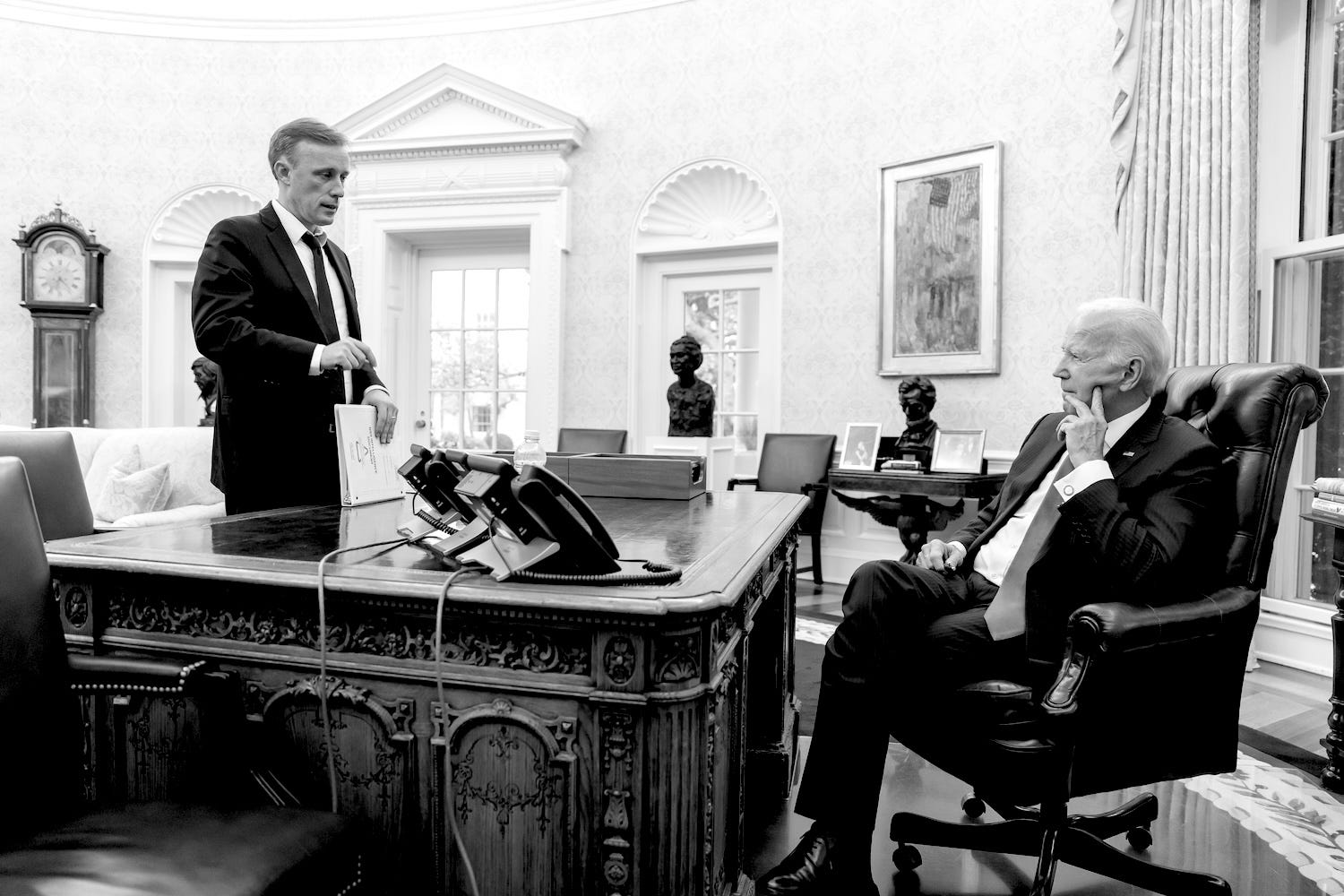
The story began with an urgent morning phone call from Netanyahu to Biden on October 11. Israel was about to invade Lebanon and Bibi wanted US support.
Biden, a decades-long friend of Israel and self-declared “Zionist,” turned him down. His military and intelligence advisers were of the unanimous view that conditions weren’t in place for an attack to succeed without massive risks to the US, especially given the likelihood that it would escalate into a regional war.
“What you guys are contemplating here is not going to work,” Biden told the Israeli leader. “I have skin in the game here.” There were 45,000 US personnel stationed in the region. “I don’t want you doing something that’s going to put our people at risk without you and me really coming to an understanding about what this is all about.”
As his aides listened in on speakerphone, Biden sought to dispel any ambiguity about his position:
“We are not on board,” Biden added. If there were any doubt, the president repeated his point: “We, the United States, are not on board for that conflict, so you should not count on our support if you preemptively launch a war against Hezbollah.”
Of course, Israel was America’s ally, so Biden made sure to add a crucial proviso: “If they attack you, if they attack Israel, the United States will always stand up for Israel’s security.” Then he pivoted back to his message. “But if you launch a preemptive war like this, we do not support it.”
Netanyahu’s reply was firm but gracious. He respected and understood Biden’s position. Of course the president had to think of America’s interests first. But Israel’s leaders had to do the same for their own country. And Netanyahu now had to tell the president, in all frankness, that his cabinet was leaning toward a preemptive attack.
Biden immediately convened a crisis meeting with his top national security officials. In an atmosphere of mounting tension, they watched and waited to see if Israel would go it alone, launching a war that could quickly escalate into a region-wide inferno.
Five minutes later, Jake Sullivan, Biden’s national security adviser, was summoned to take a call from Ron Dermer, Netanyahu’s right-hand-man and closest confidante in the cabinet.
Dermer “expressed extreme displeasure that President Biden had pushed Netanyahu not to attack,” Woodward reports. He further informed Sullivan, in no uncertain terms, that Israel’s cabinet was “shifting in the direction of a preemptive strike.”
Sullivan stood his ground. He even raised his voice: “What you are thinking about doing is dangerous. It’s irrational. We do not believe this is good for Israel and we fundamentally know it is not good for us… do not go ahead with it.” He added: “The president was deadly serious about that.”
The call ended without satisfaction for Dermer.
But looming in the background was Biden’s pledge to Bibi. Despite his advisers’ bleak assessment of the prospects of a war with Hezbollah — and thus quite possibly Iran — he had promised to give Israel his blessing if the other side attacked first. He had spoken the magic words: “The United States will always stand up for Israel’s security.”
That’s the essential context for understanding what happened three minutes later.
Three minutes later, at 11:16 a.m., Dermer called Sullivan again about Hezbollah.
Sullivan hit the speakerphone so McGurk could listen. It was now almost an open line with Israel.
“Hey, we’re just being transparent with you guys,” Dermer said. “They’ve launched the attack. There are paragliders coming from the north. One of them just landed and shot up a funeral for someone who was killed in the October 7 attack. We are going to launch the attack. And I’m telling you, you’ve got to batten down the hatches.”
Dermer said they were also getting reports of Hezbollah drones coming across the northern border, air raid sirens going off.
“I’m just telling you we have no choice,” Dermer said. “We’re going to launch the attack.” Israel had aircraft with munitions ready to strike.
He said they were going to go in 30 minutes.
They were inches away from a major Middle East war.
“Shit,” McGurk thought, “maybe Hezbollah did launch a paraglider attack.” Hamas had used paragliders on October 7.
But they had no corroborating intelligence.
McGurk left Sullivan and ran to his desk in Room 326 in the Executive Office Building next to the White House. It was the same office he was in during the Republican Bush administration. He called Centcom commander Erik Kurilla.
“Hey, my J2 says there are no paragliders,” Kurilla said, referring to the military’s intelligence portfolio. “There is no sign of any of this. It’s a phantom”...
McGurk ran back to the Oval Office, borrowing a spare tie from Deputy National Security Adviser Jon Finer on the way.
While McGurk was on the phone to Kurilla, Sullivan and Blinken made a secure call from the national security adviser’s office to DNI Haines, CIA director Burns, Secretary of Defense Austin and Chairman of the Joint Chiefs CQ Brown.
“Are we seeing any of this?” Sullivan asked them.
No we are not, the intelligence and military leaders said. Sullivan re-checked this assessment with Burns at 11:31 a.m. Still nothing, Burns said emphatically.
But they could see social media and mainstream media were filled with reports of drones and sirens. Millions of Israelis were scrambling for shelter.
Sullivan called Dermer, pulling him out of Israel’s cabinet meeting.
U.S. intelligence agencies are not seeing any of this, Sullivan said. “In fact, it’s just not there”....
At the same time, McGurk received a message from Iran, strong backers of Hezbollah, through a back channel the U.S. has with the Islamic Revolutionary Guard Corps (IRGC). The communication came through a trusted Norwegian intermediary.
Iran’s message was: “We’re not looking for a conflict. Whatever is going on we are not looking for a conflict.”
McGurk said they obviously couldn’t know for sure if the Iranians were being honest, but it was a message consistent with the U.S. intel assessment.
“Let’s deflate this thing,” McGurk said.
The time frame for action was shrinking.
At 1:00 p.m. Dermer called Sullivan, who was in the Oval Office.
The Israeli cabinet has voted against taking military action in Lebanon, Dermer said.
With relief, Sullivan briefed the president. No preemptive strike.
The Israel Defense Forces came out publicly and said the information about drones, paragliders and other attacks on the northern border was false. None of it had actually happened.
“There was an error, and we are investigating it,” IDF spokesman Rear Admiral Daniel Hagari said.

“It was such a close call,” Antony Blinken told his colleagues. According to Woodward, Blinken was “shaken” by the incident.
And for good reason: he and the rest of the Biden team had been extremely lucky. By a stroke of good fortune, on that particular day, US intelligence was able to reach a rapid, dispositive assessment that Dermer’s fictional Hezbollah funeral massacre was, in fact, a fiction.
But what if they hadn’t been so lucky?
What if there’d been no immediate way to prove one way or another what had happened at the border? Israel would then have done exactly what Dermer said it would do: It would have gone on the offensive in the north, claiming Hezbollah had attacked first, triggering a massive barrage of rockets toward Israel’s towns and cities, as rumors of a shocking massacre at a Jewish funeral filled the world’s airwaves.
What would Biden have done then? Call a press conference to explain that he didn’t think the attack was real? And that Israel would therefore be left to face the rockets alone?
This is where the Lobby comes in.
Some context: just eight months earlier, the administration had withdrawn its own nominee to an international human rights post because a Lobby-aligned website had dug up an old post in which he’d called Israel an “apartheid state.”
A month before that, Biden’s nominee to a State Department human rights job had been forced to withdraw her candidacy because the Zionist Organization of America objected to an old tweet of hers in which she’d called for disinvestment from Israel’s illegal West Bank settlements, leading a Republican senator to block her candidacy.
And Biden surely hadn’t forgotten the bruising fight during his vice-presidency over Obama’s nomination of Chas Freeman, a widely respected career foreign service officer and Israel Lobby critic, to chair the National Intelligence Council. Chuck Schumer, echoing the furious denunciations of pro-Israel groups, had accused Freeman of harboring an “irrational hatred of Israel.” That was the end for the Freeman nomination.
The tale of the fake Hezbollah attack of October 2023 is instructive precisely because in this particular case, the Biden team, staring down the barrel of a potentially catastrophic outcome for the administration, didn’t act like the improbably pliable stooges of conspiracist sloganeering. They stood up for US interests. And thanks to a lucky break, they succeeded.
But the Lobby and its organizations had created a political reality in which, absent that stroke of luck, they would have been forced to act like pliable stooges, lest they be accused, as the Israeli Policy Forum put it Wednesday, of blaming everything on “perfidious Jews.”
International politics is a devious game and trust between allies is a perennial issue in diplomacy. But countries have strong incentives not to deceive their closest allies. One country will only pledge to come to another’s defense if it has confidence its partner will tell it the truth. If a country repeatedly lies, it loses its allies’ trust. That’s how things usually work.
But what if a domestic Lobby has convinced a country’s leadership class that questioning the integrity of a particular ally is a grave, potentially career-ending moral transgression? Then the incentive structure breaks down and the alliance becomes dysfunctional. In the US-Israel relationship, that’s been the reality for decades. And you don’t need to be a conspiracy theorist to see it.